
El duelo por la pérdida de una mascota es real: investigación, estadísticas y por qué los memoriales importan
Productos destacados
Direct Answer: Is Pet Loss Grief Real?
Yes — pet loss grief is real. Millions of households share daily life with dogs and cats, often treating them as family. When that bond ends, sadness, longing, and disruption of routine are common. Research also suggests that for some people, grief after pet death can look a lot like grief after human bereavement.
This guide summarizes public statistics and peer-reviewed findings, then explains how gentle memorials can support remembrance — without replacing professional mental-health care when it is needed.
How Common Are Pet Bonds? (AVMA Data)
National veterinary data help explain why pet loss is not a niche experience.
According to the American Veterinary Medical Association (AVMA) 2025 Pet Ownership and Demographic Sourcebook (summary published on the AVMA’s U.S. pet ownership statistics page):
| Measure (2025) | Figure |
|---|---|
| U.S. households with any pet | 77.5 million (58.6% of households) |
| Dog-owning households | 56.3 million (42.6%) |
| Cat-owning households | 43.1 million (32.6%) |
| Estimated U.S. dog population | 87.3 million |
| Estimated U.S. cat population | 76.3 million |
Source: AVMA — U.S. pet ownership statistics (data credited to the 2025 AVMA Pet Ownership and Demographic Sourcebook).
AVMA reporting around National Pet Week has also highlighted the strength of the human–animal bond, including high shares of dog and cat owners who describe pets as family members (as summarized in veterinary trade coverage of the AVMA release). That “family” framing helps explain why goodbyes can feel so sharp.
What Research Says About Pet Grief
Prolonged grief symptoms after pet death
A peer-reviewed study in *PLOS ONE* examined whether prolonged grief disorder (PGD) symptoms can follow the death of a pet, even though current diagnostic manuals generally reserve a formal PGD diagnosis for human bereavement.
Key findings from that nationally representative UK sample (N = 975):
- **32.6%** of respondents had experienced the death of a beloved pet
- Among people who had experienced both human and pet loss, **21.0%** said the pet death was their **most distressing** bereavement
- The **conditional rate of PGD** following pet bereavement was **7.5%** in that analysis
- Pet bereavement accounted for an estimated **8.1%** of PGD cases in the population sample
- PGD symptom measurement showed **full measurement invariance** between human-loss and pet-loss reporters (symptoms clustered in a comparable way)
Source: Cleland, C., et al. (2025). *No pets allowed: Evidence that prolonged grief disorder can occur following the death of a pet.* *PLOS ONE.* https://doi.org/10.1371/journal.pone.0339213
What “prolonged grief disorder” means clinically
The American Psychiatric Association explains that prolonged grief disorder involves intense, persistent grief that impairs daily functioning — a smaller group than everyone who feels deep sadness after a death.
Source: American Psychiatric Association — Prolonged Grief Disorder
Important nuance for readers: Research showing similar *symptoms* after pet loss does not automatically mean a clinician will (or should) apply a human-bereavement diagnosis to every pet death. It does support taking pet grief seriously and seeking help if functioning stays severely impaired.
Earlier psychometric work on pet-loss impairment
A psychometric study of adults impaired during pet bereavement found that grief-related symptom clusters consistent with a DSM-5 grief-disorder model could apply to owners of deceased pets, and that higher grief was linked with more depression, loneliness, and sleep difficulty in that sample.
Source: Lee, S. A. (2020). *Does the DSM-5 grief disorder apply to owners of deceased pets? A psychometric study of impairment during pet loss.* *Psychiatry Research.* ScienceDirect record
Why Pet Grief Is Often Misunderstood
Veterinary education materials often describe pet loss as a form of disenfranchised grief — grief that society does not fully recognize, which can leave people feeling isolated.
Source context: Bond-centered pet-loss guidance for veterinary teams (e.g., Seneca Polytechnic / VCA Canada *Pet Loss Best Practice Guidelines for Veterinary Teams*) emphasizes compassionate end-of-life communication precisely because families expect their bond to be understood.
That social silence is one reason memorials matter: they make the love visible without forcing anyone to “move on” on someone else’s timeline.
How Memorials Support Continuing Bonds
Memorials are not a cure for grief. They are rituals and objects of remembrance that help many families keep a continuing bond — a photo on a shelf, a short engraved line, or a private digital page relatives can visit.
Practical options that fit different needs:
| Need | Memorial approach | Start here |
|---|---|---|
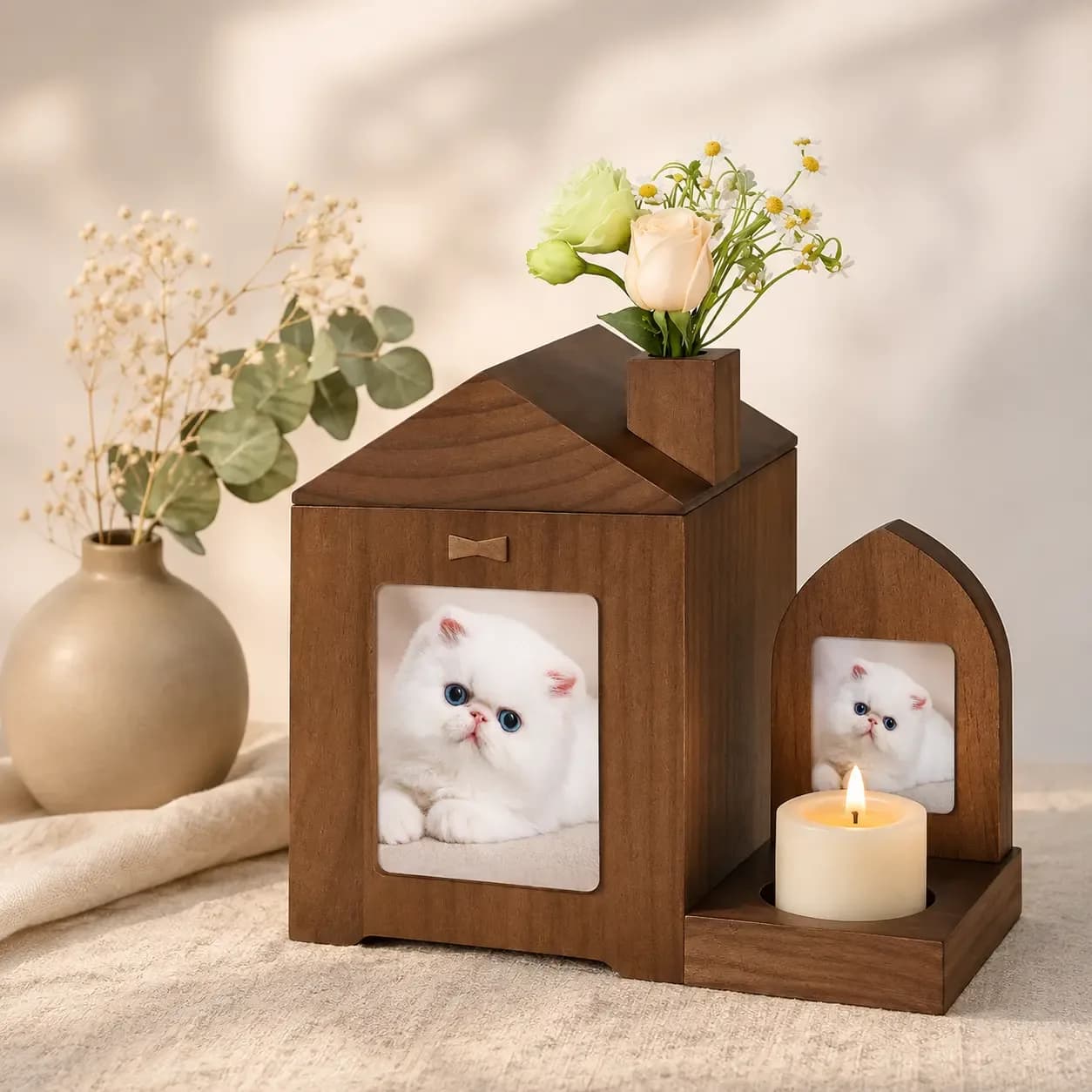
| Daily home reminder | Photo + name/dates | Personalized pet memorial frame |
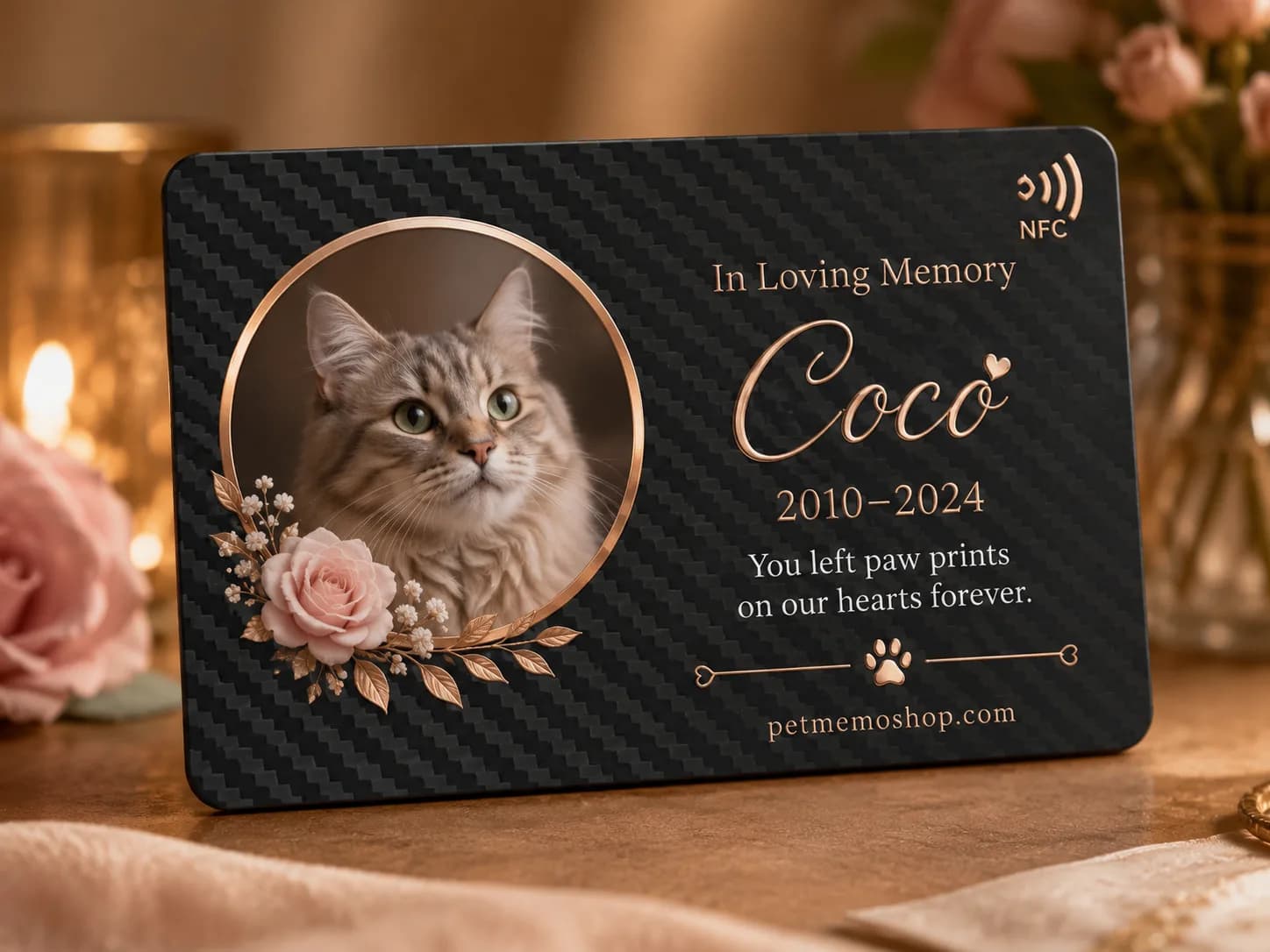
| Shareable story for family | Online page via link / QR / NFC | Digital memorial page or NFC tag |
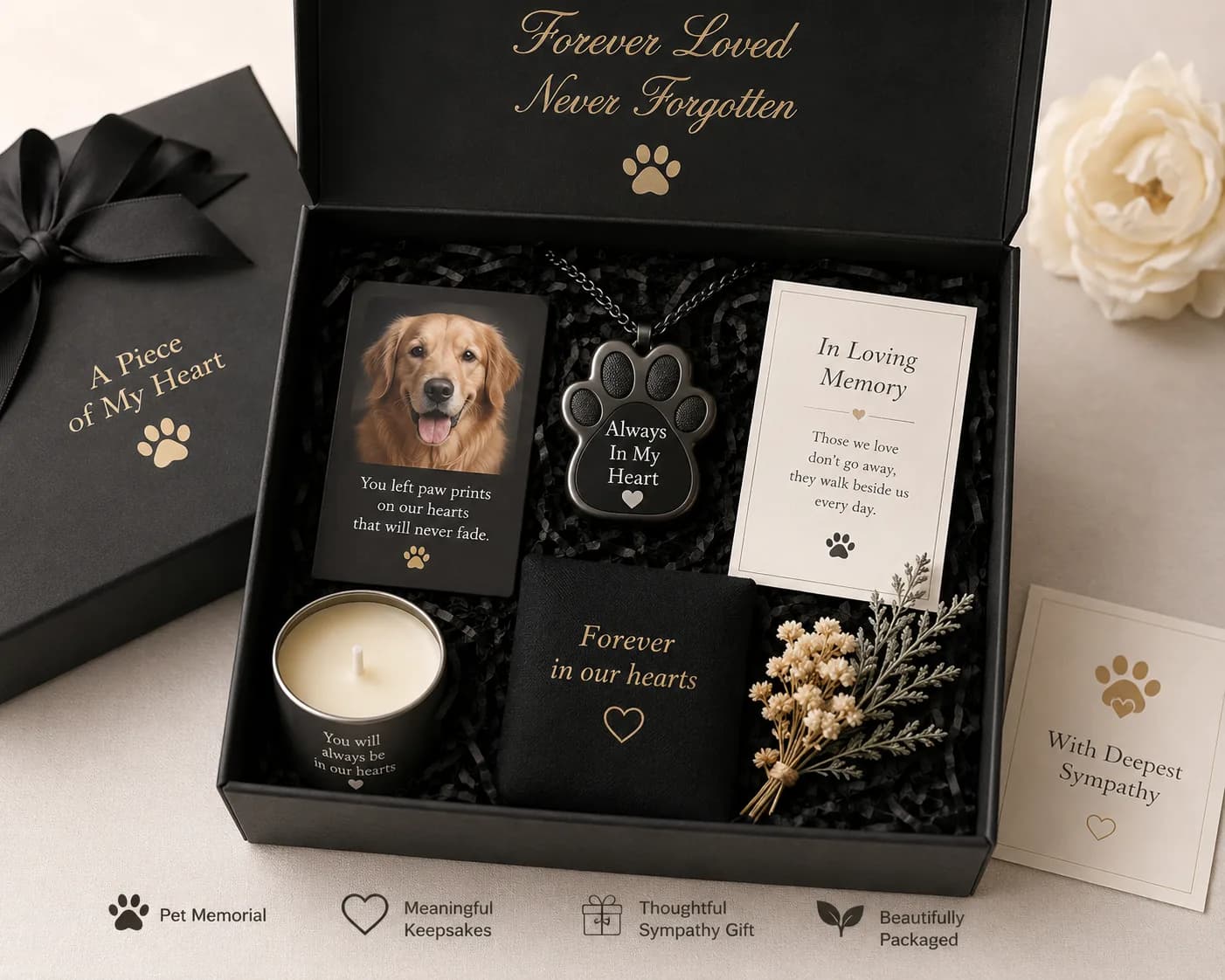
| Sympathy gift for a friend | Ready-to-give set | Memorial sympathy gift box |
| Words for engraving | Short name + message | What to write on a pet memorial |
For a broader gift overview, see how to choose a pet memorial gift and pet loss sympathy gift ideas.
Gentle Next Steps (Not Medical Advice)
- **Allow the grief to be named** — “I miss them” is enough.
- **Choose one small remembrance** rather than a large, pressured project.
- **Invite family into the story** when a digital page or shared photo helps.
- **Seek professional support** if daily functioning stays severely impaired for a prolonged period.
Pet Memo Shop creates personalized keepsakes and digital memorial pages for families who want a warm, lasting tribute — not a replacement for counseling.
Sources
- American Veterinary Medical Association. *U.S. pet ownership statistics* (2025 data from the AVMA Pet Ownership and Demographic Sourcebook). https://www.avma.org/resources-tools/reports-statistics/us-pet-ownership-statistics
- Cleland, C., et al. (2025). *No pets allowed: Evidence that prolonged grief disorder can occur following the death of a pet.* *PLOS ONE.* https://doi.org/10.1371/journal.pone.0339213
- American Psychiatric Association. *Prolonged Grief Disorder.* https://www.psychiatry.org/patients-families/prolonged-grief-disorder
- Lee, S. A. (2020). *Does the DSM-5 grief disorder apply to owners of deceased pets?* *Psychiatry Research.* https://www.sciencedirect.com/science/article/abs/pii/S0165178119320918
Final Takeaway
National ownership data show how central pets are to household life; peer-reviewed research shows pet bereavement can be deeply distressing and, for some people, clinically significant in symptom pattern. A thoughtful memorial will not erase loss — but it can honor a real bond with clarity, dignity, and care.
Frequently Asked Questions
Comprar colecciones relacionadas
Encuentre el regalo conmemorativo perfecto
Explore recuerdos personalizados elegidos para acompañar esta guía.
Comprar Regalos de condolencia por pérdida de mascota